
Most PCM suppliers sell one material family and ask you to design around it. We run organic, inorganic, and microencapsulated lines under one roof, so the material is chosen by your application — not by what happens to be in stock.
Whether you are stabilizing a cold-chain box, tuning a textile, buffering a battery pack, or storing industrial waste heat, the starting point is the same: your working temperature, your latent heat requirement, and your production process. We work backward from there.
Product line
Melting point
Core strength
Typical fit
Organic PCM (bio-based / paraffin)
Bio-based grades approx. 32–55 °C; paraffin grades across the low-to-mid range
Minimal supercooling, chemically stable, low corrosivity
Building materials, textiles, cold chain, battery thermal management
Inorganic PCM (salt hydrate / molten salt)
Custom melting points; molten salt grades 140 °C+
High volumetric latent heat, non-flammable, good thermal conductivity
Large-scale storage, floor heating, waste heat recovery, solar
Microencapsulated PCM
Custom transition temperature and particle size
Leak-proof polymer shell, direct compounding, fast response
Thermoregulating textiles, coatings, foams, composites, slurries
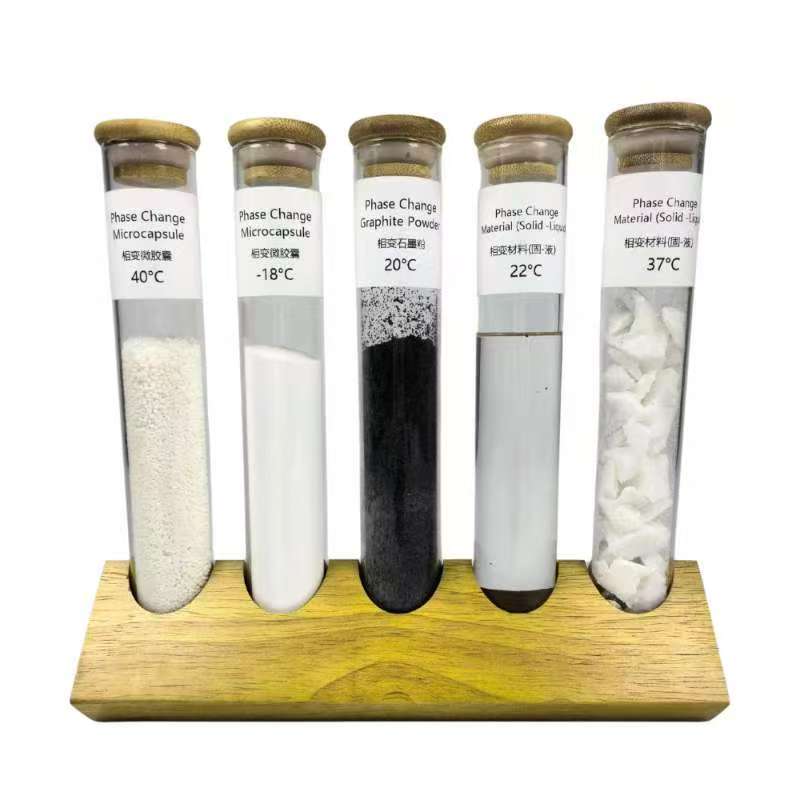
Two organic routes run in parallel: bio-based (fatty acid) grades and petroleum-based paraffin grades. At the same melting point you can choose on carbon footprint or on cost — instead of accepting whichever option your supplier happens to carry.
What it gives you
l Negligible supercooling and no phase separation — the material releases heat at the temperature you designed for, so your system does not need oversized buffers or re-tuning after installation.
l Low corrosivity — compatible with most metal containers and building substrates. You can skip expensive protective liners and secondary coatings.
l High latent heat in a stable formulation — more heat stored per kilogram means less material, smaller volume, and a lower total system cost for the same thermal capacity.
l Bio-based grades — renewable feedstock, low odor, lower carbon footprint. A practical choice for projects with green building certification or ESG reporting requirements.
l Easy to integrate — blend, absorb into carriers, or encapsulate. The material adapts to existing production lines rather than forcing a redesign.
Typical applications: cold-chain insulated boxes and shipping containers, temperature-controlled transport packs for laboratory, medical, and pet/reptile use, wearable cooling and heating garments, personal thermal comfort products, building envelopes and wallboards, battery thermal management, thermoregulating textiles.
Available forms: bulk liquid, powder, granulate, macro-packed panels, and custom packaging.
When your priority is stored heat per cubic meter, non-flammability, or temperatures above the organic ceiling, inorganic salt hydrates and molten salts do what organics cannot.
What it gives you
l High volumetric latent heat — the same stored energy in noticeably less space, which decides feasibility in space-constrained cold boxes, tank insulation, and thin wall assemblies.
l Non-flammable — one less fire-load consideration in your compliance file, and a simpler path for construction and transport approvals.
l Better thermal conductivity than organics — faster charge and discharge, so your system responds quickly instead of becoming a bottleneck.
l Low raw-material cost at scale — water and hydrated salts are inexpensive inputs, making large-volume projects economically viable.
l No volume shrinkage during phase change — stable fill level and predictable behavior inside sealed containers.
l Molten salt grades reach 140 °C+ — covering medium-to-high temperature storage that organic materials cannot serve.
Typical applications: large-scale thermal energy storage, underfloor and radiant heating, industrial waste heat recovery, container and tank insulation, solar thermal storage, stationary thermal buffer units.
Section 2 — Product Lines
2.1 Organic Phase Change Materials (Bio-based & Paraffin)
2.2 Inorganic Phase Change Materials (Salt Hydrate & Molten Salt)
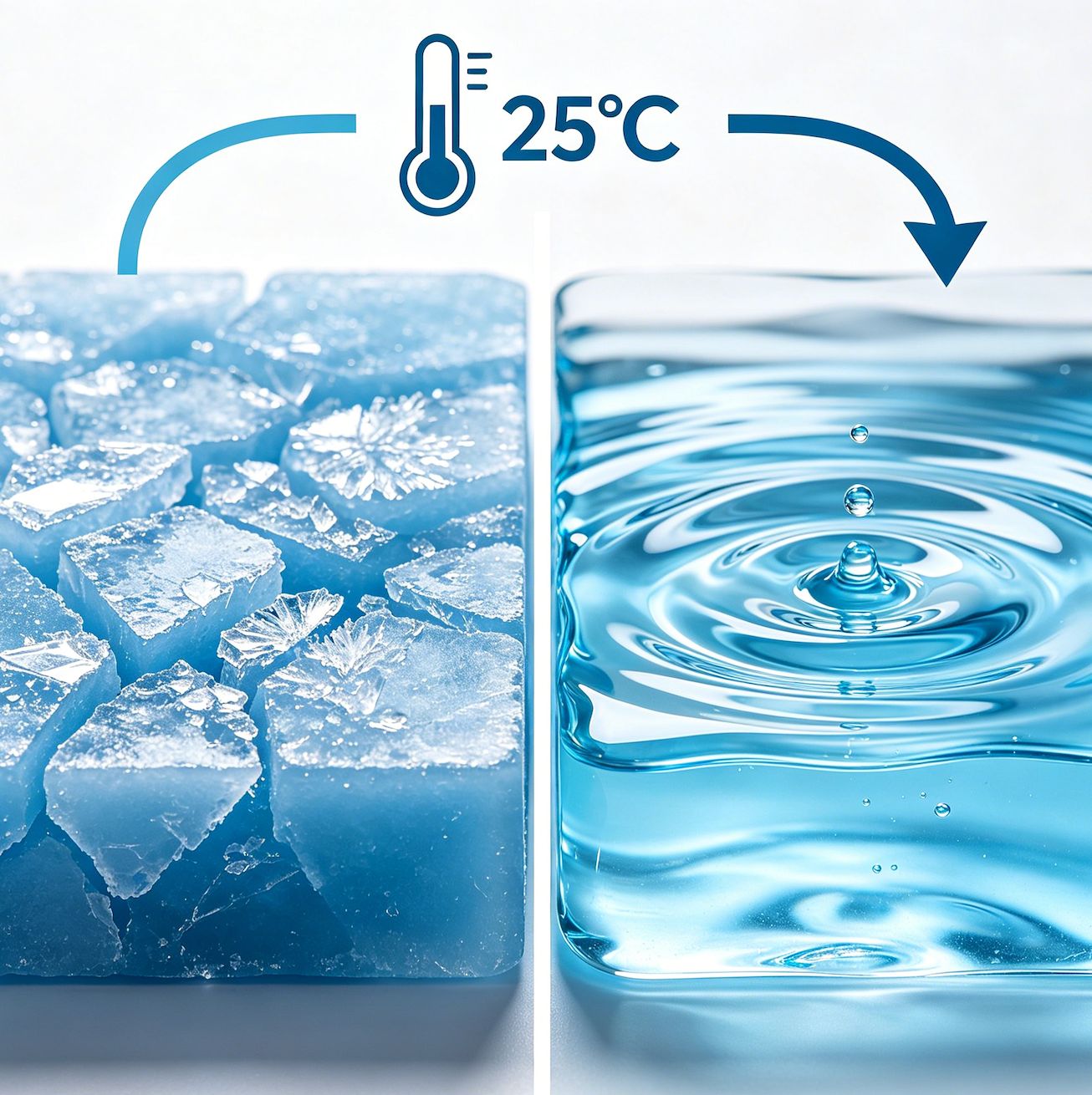
The PCM core is sealed inside a polymer shell, so you receive a dry, handleable powder or a pumpable slurry instead of a leaking liquid that needs secondary containment.
What it gives you
l Zero leakage in the melted state — you skip in-house encapsulation, secondary packaging, and the leak-failure risk that comes with bare PCM.
l Direct compounding — mix into coatings, fabrics, foams, concrete, or composite substrates without changing your existing process.
l Large heat-exchange area and fast thermal response — micro-sized capsules react quickly, which matters in thin coatings and textiles where bulk PCM responds too slowly.
l Stable performance after repeated cycling — the shell protects the core, so performance holds up over a long service life.
l Customizable shell, not just core — thermally conductive shells for faster heat transfer, flame-retardant shells for fire-rated systems, light-absorbing shells for photothermal conversion. You specify the function; we engineer the shell.
Typical applications: thermoregulating textiles and apparel, functional coating additives, foam boards and insulation panels, electronics heat dissipation, concrete and construction composites, printing inks, thermal functional fluids and slurries.
Available forms: dry powder or slurry, with customizable particle size distribution and shell chemistry.
2.3 Microencapsulated Phase Change Materials
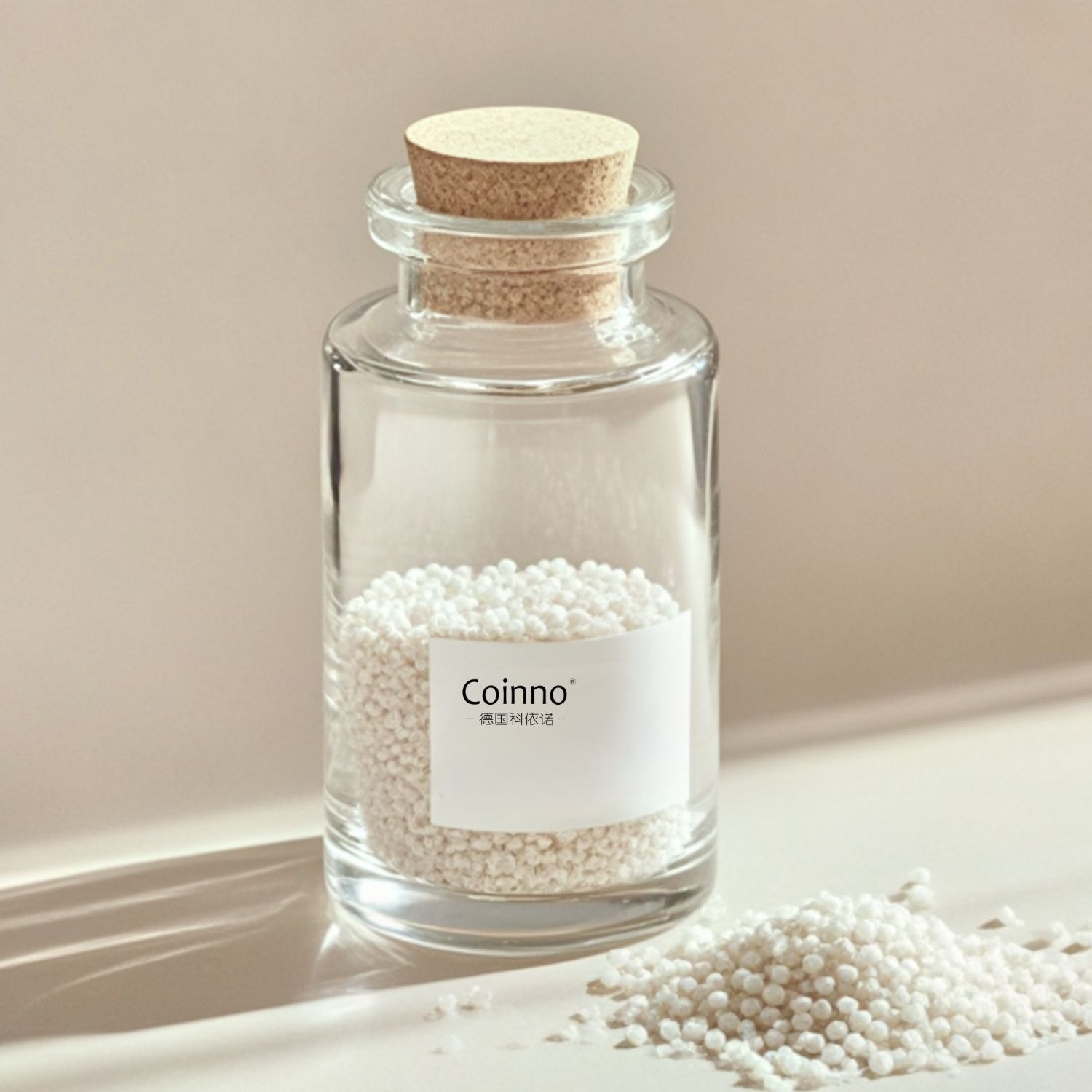
Six capabilities buyers ask about most: temperature-range customization, engineering cooperation, in-house equipment, enthalpy, batch stability, and cycle life. Each one is written as a benefit for your project, not a claim about us.
We do not hand you a price list of fixed melting points. Bring us an operating temperature, and we formulate backward from your target phase-change point, latent heat, form factor, and cost target. With two organic routes plus inorganic and microencapsulated lines, we cover cold-chain temperatures through 140 °C+ high-temperature storage — and at the same temperature we can offer different options depending on your carbon footprint requirements and cost sensitivity.
Customization does not end with a melting point quote. Our technical team confirms your use case first — building material blending, textile finishing, cold-chain storage, or liquid-cooling slurry — then adjusts nucleating agents, thickening systems, shell type, and particle size distribution to match. We join at the sample stage, support compatibility testing and dosage recommendations, and adapt process parameters when you scale up to your own line.
Change the formula. Shift the temperature. Switch the encapsulation form. Our answer is the next version, not a refusal.
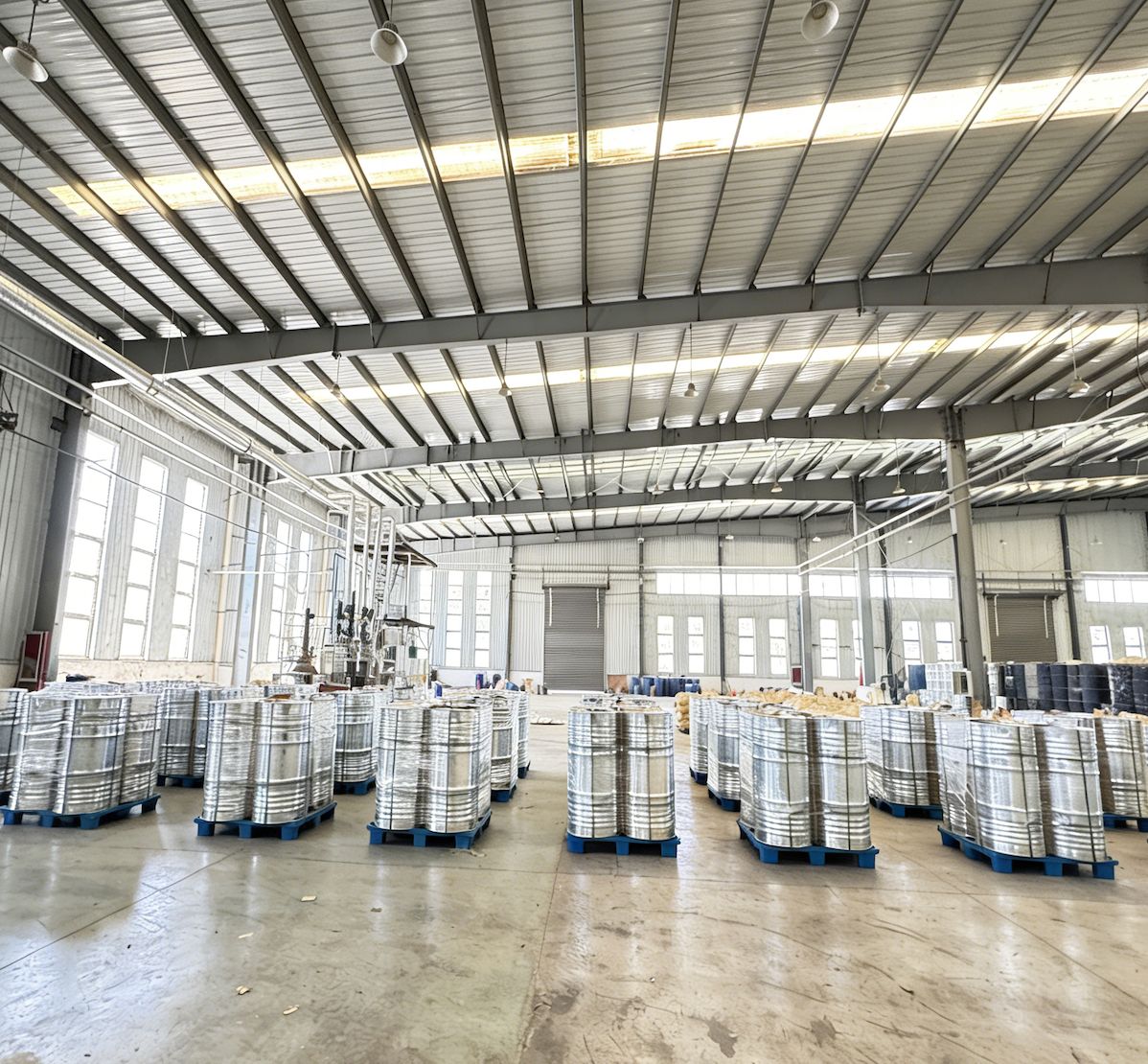
The factory holds the full PCM process chain: esterification and refining for organics, nucleation modification for inorganic salt hydrates, emulsification and shell polymerization for microencapsulation. Critical steps are not outsourced. That gives you lead times we control and batch consistency we own — and when you want to change shell material, adjust particle size, or run a composite modification, you are not coordinating between three suppliers.
Formulations and purity control are tuned to your operating conditions, keeping latent heat at the high end of what is achievable for each chemistry. The practical result: less material, smaller volume, lighter system, lower total cost for the same thermal capacity. In space-sensitive designs — thin walls, compact cold boxes, battery modules — enthalpy is often what decides whether the design works at all.
Organic systems show no supercooling and no phase separation, with minimal enthalpy decay after cycling. Inorganic systems are nucleation- and thickening-modified against the same failure modes, with stability verified before shipment. Melting point and enthalpy are held within a narrow window between batches, so your production line does not need to re-tune parameters for every delivery.
What you buy is the certainty that it performs once it is mixed in — not a trial-and-error kit.
Products are put through repeated melt–freeze cycles. Organic systems deliver strong cycling stability with low decay; inorganic systems control phase separation risk through encapsulation and modification. For construction, textiles, and cold chain — applications that cycle for years — cycle life decides replacement cost and system reliability. We share cycle test data to support your selection, not just an initial enthalpy number.
Section 3 — Why Our Factory
3.1 Custom at any temperature — not a catalog of standard points
3.2 High cooperation — engineers stay on your project
3.3 Complete in-house equipment — the whole chain, not assembly
3.4 High enthalpy — more heat per gram
3.5 Stable performance — consistent batch to batch
3.6 Long cycle life — tested, and documented
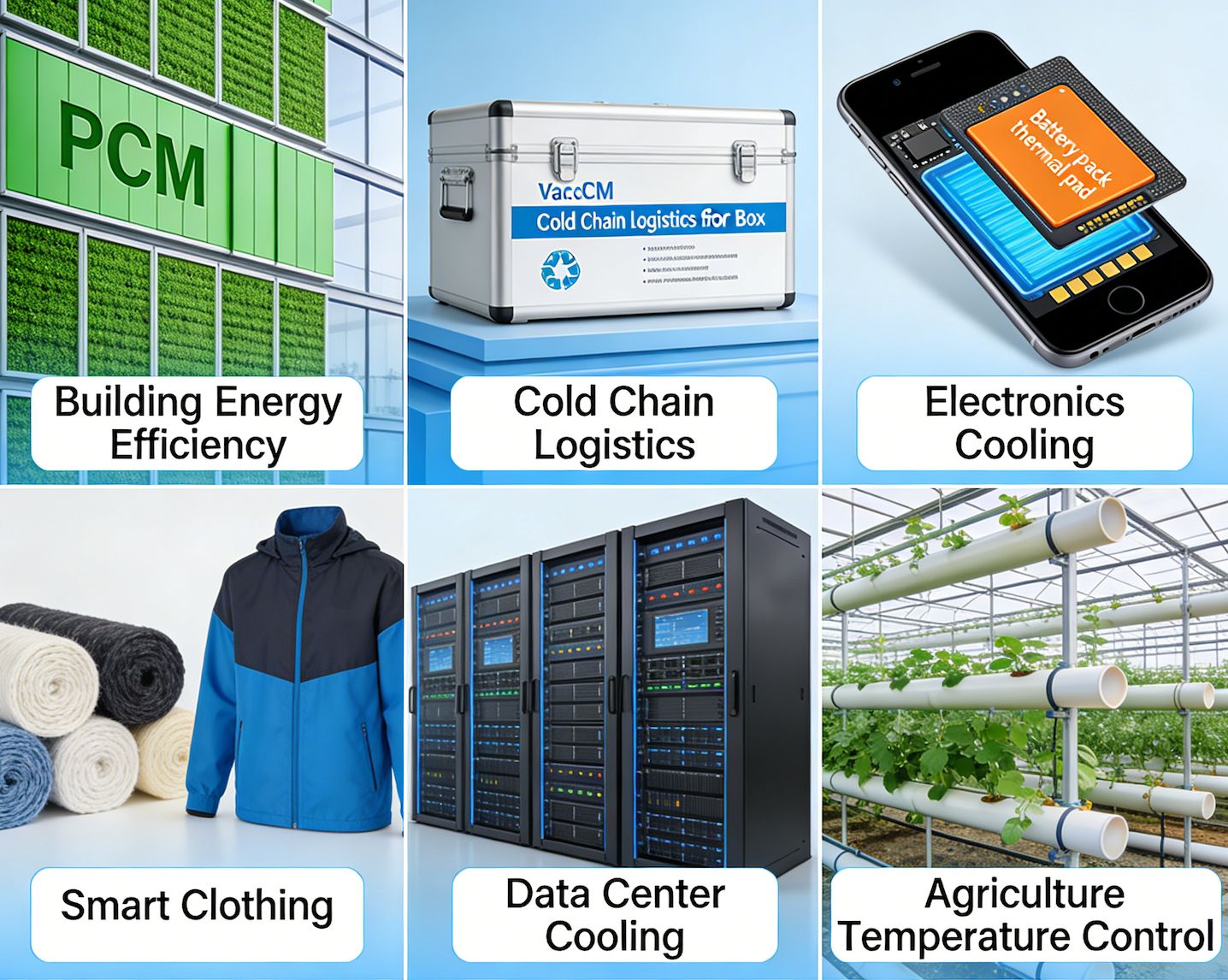
Industry
Typical use
Cold chain & logistics
Insulated boxes, vaccine and medical transport, food cold storage, temperature-stable shipping
Building & construction
Wallboards, ceilings, floor heating, thermal mass retrofits, energy-saving envelopes
Textiles & apparel
Thermoregulating fabrics, outdoor and workwear, bedding, footwear
Battery & electronics
Cell thermal buffering, module temperature equalization, electronics heat dissipation
Medical & laboratory
Sample and reagent transport, temperature-controlled storage
New energy & industry
Solar thermal storage, industrial waste heat recovery, large-scale storage systems
Consumer goods
Pet and reptile transport packs, wearable cooling, sauna and personal comfort products
Section 4 — Applications We Serve
1. Tell us the requirement. Operating temperature, latent heat target, form factor, volume, and process constraints.
2. We formulate and quote. A recommended grade with specification sheet, sample plan, and indicative pricing.
3. You validate the sample. We support compatibility testing, dosage trials, and process adjustment on your line.
4. We scale with you. Batch production with consistent specs, cycle data on request, and OEM/ODM support for new product co-development.
Can you produce PCM at a specific melting point?
Yes. Custom melting points are standard for us. Share your target transition temperature and tolerance, and we will confirm feasibility and lead time.
What is your minimum order quantity?
Sample quantities are available for evaluation. Production MOQ depends on material family and packaging form — tell us your target volume and we will quote accordingly.
Do you support OEM and ODM?
Yes. We support private-label packaging and joint development of new formulations, including shell chemistry and particle size customization for microencapsulated products.
Can you provide test data?
Yes. Latent heat, melting point, and cycling stability data are provided per grade, and additional testing can be arranged for project-specific validation.
How do you handle the supercooling problem in salt hydrates?
Through nucleation and thickening modification tuned to your operating conditions, with cycle stability verified before shipment.
Send us your specification — we will tell you what is achievable.
Melting point, latent heat, form factor, annual volume. Our engineers reply with a recommended grade, sample availability, and lead time.
Section 5 — How We Work
Section 6 — FAQ
Section 7 — Closing CTA

 琼公网安备46902302000892号